.jpg)
Penang's 2026 Hotel Boom: The Ultimate Guide to Pre-Opening Hotel Photography For Hoteliers

Updated: Sep 1

Penang probably has its biggest hotel pipeline in years, and it's arriving all at once. Just to name a few of them; The Bertam, Penang — a Tribute Portfolio rebrand signed in May 2026 — opens in Q4. Hotel Rice Miller, a heritage boutique in George Town, is due around September, and as of this writing it has a few reels on social media that is gaining traction but zero well-shot imagery in public circulation. InterContinental Penang Resort, IHG's first InterContinental resort in Malaysia and the reinvention of the old Mutiara Beach Resort, soft-launches late 2026 with 355 rooms and six villas.
Three very different properties: a rebrand, a heritage conversion, a beach resort. Same deadline pressure, and also possibly the same marketing problem.
As an established hospitality photographer in Malaysia, I've photographed enough hotel openings, rebrands, and repositionings to recognise the pattern before it happens. Most of the time pre-opening teams treat photography as a last-minute task. Rooms, F&B, staffing, and the soft-launch date all get planned; but photography only gets raised a month or two before the opening, usually phrased as "we'll need photos for the website." Sometimes it's even raised after opening, which is worse. It's understandable. There are a hundred moving parts, and photography sits at the end of the list because it feels like a just another deliverable rather than a decision.
But from what I see, it's the decision with the longest tail and carries a lot of weight. Get it wrong, and the hotel spends its first year undoing a first impression instead of building on one. Most Penang hotel photography is commissioned this way: late, reactive, and shaped by whatever is still possible rather than by what the launch actually needs. Here are the three mistakes I see most often, and how to avoid them.
Mistake 1: Commissioning The Photography Too Late
The pre-opening window is the only time a property can tell the construction-to-completion story. Bare concrete becomes the lobby. The hoarding comes down. The first finished room gets its furniture. A heritage façade gets restored. These are story beats that exist for a few months, then disappear permanently. There is no way you cannot re-shoot "before opening" after opening.
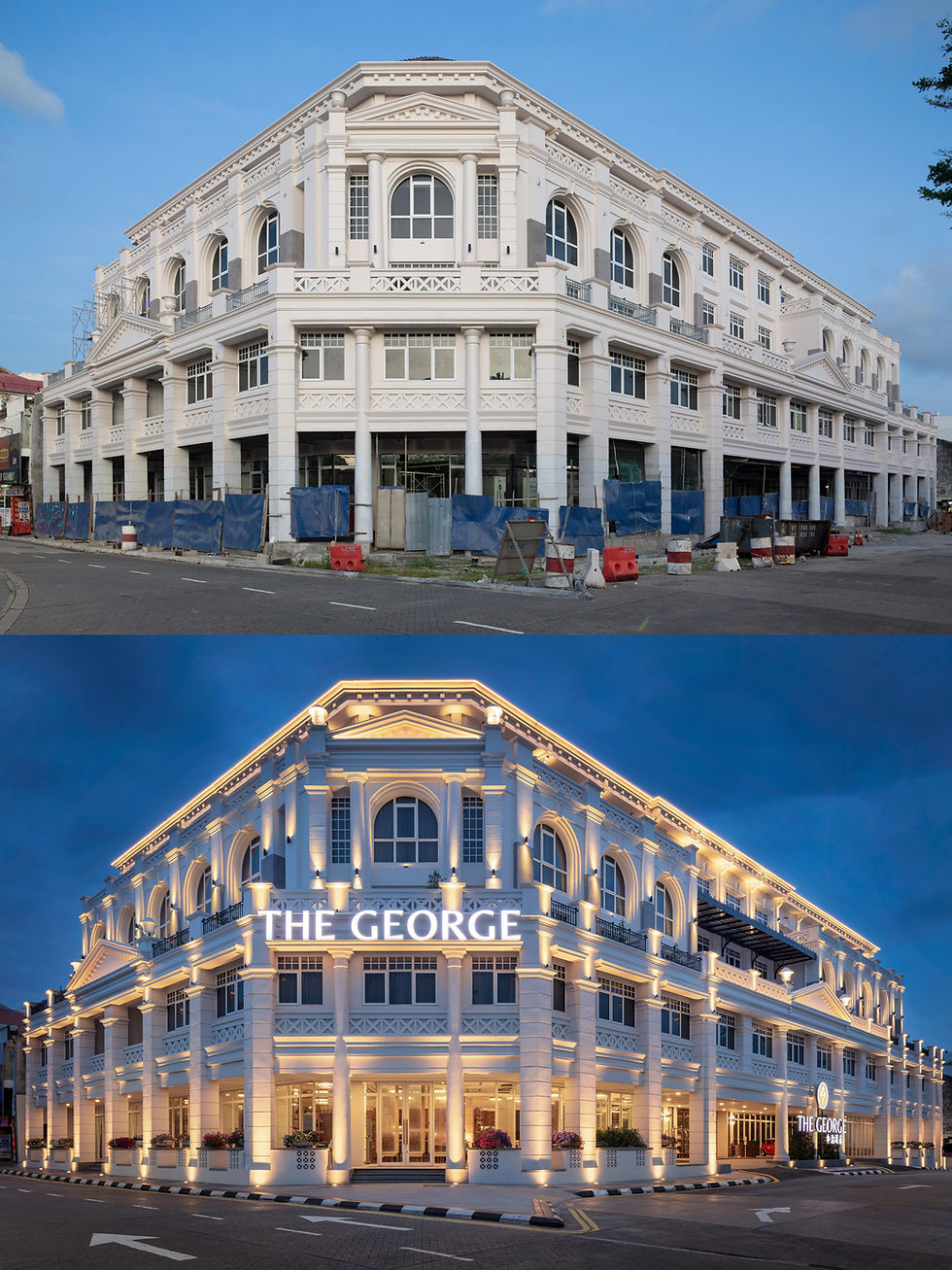
That storytelling is what pre-launch marketing runs on: the teaser content that fills social feeds, the "opening soon" pages, the early-booking campaigns. A hotel that captures it has months of genuine material, and demand building before the doors open: early bookings, waitlist signups, press interest. A hotel that doesn't is left with renders and developer shots, which guests have learned to discount. Yet the pre-listing pages, the press round-ups, and the first wave of searches all run on whatever imagery exists before opening day, judged without the benefit of a tour or a meal. The images either sell the story or they don't.
By launch, the story beats slowly diminish, and the property opens with no narrative. It's the cheapest content a new hotel can leverage on and will ever have the chance to make, and the window closes during the months when nobody thinks about it.
Mistake 2: Treating The Actual Launch Shoot As Renovation Documentation
Some teams do commission photography before opening, then use it like a record of the renovation. Walls up. Tiles laid. Furniture placed. Technically accurate, commercially useless. The guest choosing between two hotels does not care what the construction looked like. They care what the pool looks and feels like at golden hour, what dinner looks like, what the room feels like on a rainy afternoon.

Booking channels indirectly punish stale and inconsistent imagery because of low CTR ratings. A listing with a thin, mismatched library naturally converts worse on the OTAs, and the direct-booking story suffers the same way: the same few photos, tired by month three. The effect shows up in the numbers a GM actually watches — OTA conversion, direct bookings, the first year's RevPAR — at the exact moment the property is trying to establish its rate positioning. Hotel launch photography in Malaysia tends to fail exactly this way. Sadly, some of these properties that are affected by an underwhelming library have good spatial design, and even good service staffs.
The fix is a full library, shot as one coherent set: rooms, F&B, spa, aerial, lifestyle. Not assembled piecemeal from three shoots in two different seasons, but planned, lit, and styled as a single visual system. That completeness is what makes a guest choose one property over the one next door.
Mistake 3: Skipping The Visual Rebrand
A rebrand or repositioning without new photography is a rebrand nobody notices. The name changes, the logo changes, the copy changes, and the images still say the old thing.

I've seen this in repositioning work, and the MÙ Hotel project is a good example of what it takes. The photography is where a new promise becomes visible, or doesn't. The same set of images has to hold up across the website, the OTAs, and the socials. If the photos don't change, the message doesn't land, no matter how good the new signage is.
The Fix: Plan The Pre-Opening Hotel Photography Calendar Backwards From Soft Launch
None of this requires a bigger budget. It requires a calendar. Hotel pre-opening photography isn't a single shoot; it's a sequence planned backwards from the soft-launch date:
Here is what I recommend;
Teaser content - Construction-to-completion storytelling, shot while the story is still happening, six to nine months out.
Room library - As soon as a finished room exists, three to four months out, so the property can start booking on its own images instead of renders.
F&B, spa, aerial, lifestyle - Once the spaces are complete and staffed, two to three months out.
Launch campaign assets - Four to six weeks before soft launch, built for the paid campaigns, the press release, and the opening announcements.
Refresh cadence - Six to twelve months after launch: new menus, seasonal light, the property as it actually lives.
Planning backwards works because the soft-launch date is the one date that rarely move forward, and photography is the discipline that compresses worst under pressure. A shoot that needs a finished space and decent weather cannot be squeezed into two weeks when the weather does not cooperate. It also gives the property time to be photographed in its best light, literally: the right season, the finished landscaping, the golden-hour windows that no launch-week rush will ever produce.
This isn't theory. The work behind all my hotel work is where these lessons come from, and the pattern holds across property types: heritage, resort, urban rebrand. Teams that plan the calendar first look finished on day one. Teams that don't are still playing catch-up six months in, re-shooting what should have been done once, properly.
Plan It Three To Six Months Out
If your property is in the pre-opening window, the right time to have this conversation is now: three to six months ahead of launch, not three weeks before — earlier if you still want the construction-to-completion teaser window, which opens six to nine months out. A planning call covers what to shoot, in what order, and what can wait. Knowing what a launch actually needs before the deadlines start moving is the practical part of the job as a hospitality photographer in Penang.
The 2026 pipeline is a rare moment. The Bertam, Hotel Rice Miller, and the InterContinental Penang Resort will all open within months of each other, and guests will compare them directly. The properties with a complete, consistent visual story will win that comparison, and photography is the cheapest way to make sure that's you.
If you are having a pre-opening? Let's plan the shoot calendar before the soft-launch date locks in. Book a photography planning call via the contact page or write to me at yzhensiang@gmail.com. Alternatively, you can also download our capabilities deck to see how we can help you engineer visuals that elevates your brand perception.


Comments